Showing posts with label Japan Earthquake. Show all posts

Friday, March 18, 2011

After G-7 pledges Yen rise curbed to support Japan

After G-7 pledges Yen rise curbed to support Japan - The Yen backed away from historic highs and Japanese shares rose Friday after the Group of Seven major industrialized nations promised coordinated intervention in currency markets to support Japan's recovery from a catastrophic earthquake and tsunami.

The G-7 pledge came a day after the yen soared to an all-time high against the dollar, possibly threatening Japan's exports and hampering its economic recovery from the Mar. 11 quake that triggered an unfolding nuclear crisis.

The dollar jumped to 81.26 yen from 79.45 immediately after the announcement and was trading at 81.66 mid-afternoon. It was unclear whether that was due to government intervention or to traders reacting to the news. The dollar briefly slumped to 76.53 yen on Thursday — an all-time low for the U.S currency and a record high for the yen.

The benchmark Nikkei 225 stock average closed up 2.7 percent Friday following a turbulent week of trading amid the escalating nuclear crisis. The index is down nearly 12 percent since March 10, the day before the quake.

The G-7 statement sent a "strong message" to reassure jittery markets, said Masafumi Yamamoto, chief foreign exchange strategist at Barclays Capital Japan. It would be the first time since late 2000 that the governments have jointly intervened in currency markets.

Japan's Finance Minister Yoshihiko Noda said the planned intervention was meant to calm "volatility" and G-7 governments had no target exchange rate.

"We are not aiming for a specific level," the minister told reporters.

The G-7 statement adds to a flurry of moves by Japan to calm roiled financial markets following the 9.0-magnitude quake and tsunami in northeastern Japan, which killed has thousands of people, left hundreds of thousands homeless and damaged reactors at a nuclear power plant.

apan's central bank welcomed the G-7 initiative. The bank has tried to calm money markets by injected 38 trillion yen ($470 billion) in emergency cash this week on top its regular funding activities.

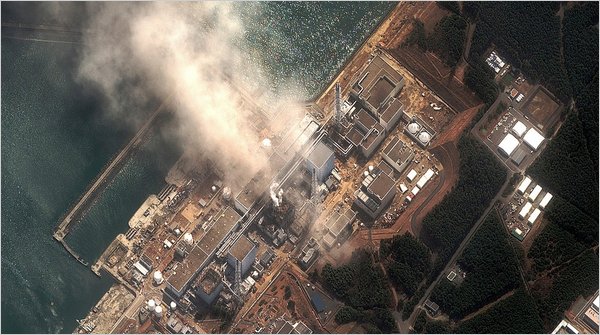
At the crippled Fukushima Dai-ichi nuclear power plant, military fire trucks sprayed the troubled reactors for a second day Friday, with tons of water arcing over the facility in desperate attempts to prevent fuel from overheating and spewing dangerous levels of radiation. The U.N. atomic energy chief called the disaster a race against the clock that demands global cooperation.

Quake damage and power cuts have forced Toyota Motor Corp., the world's biggest automaker, and other major manufacturers to suspend production, sending ripples through the global economy.

Analysts expect automakers to recover in coming weeks though most were still working on lining up alternative parts suppliers Friday to replace those damaged in Japan's northeast. Nissan Motor Co. and Mitsubishi Motors Corp. restarted some facilities this week using parts already in stock but that will continue only as long as inventory lasts.

"It's all guesswork," Koji Endo, analyst with Advanced Research Japan, said of the potential damage.

Japan's Mizuho Bank said technical trouble that has hit its automatic teller machines is expected to have affected more than 1 million transactions worth 700 billion yen ($8.9 billion) by the end of Friday. The bank, Japan's third biggest, is investigating but has yet to find a cause, said spokeswoman Masako Shiono.

In a joint statement issued following emergency discussions, the G-7 officials said that the United States, Britain, Canada and the European Central Bank will join with Japan in a "concerted intervention" in currency markets Friday.

"We express our solidarity with the Japanese people in these difficult times," the statement said.

Noda, the finance minister, expressed Japan's gratitude.

The yen's rise was driven by expectations that Japanese companies would sell dollar-denominated assets and buy yen to pay for quake recovery. Traders said there was no sign that happened, which meant government intervention might be able to discourage further speculation.

Barclays Capital's Yamamoto said the G-7 pledge of cooperation was a striking contrast to last year's talk of possible "currency wars" and governments trying to weaken their currencies to shore up exports amid the global crisis.

"It's completely different from last year," he said. "People were talking about currency wars and competitive devaluation. So it's a total change. In that sense, it was very significant that speculative yen appreciation can be attacked by coordinated action."

Goldman Sachs estimated Japan's disaster losses could reach $200 billion, the equivalent of more than 3 percent of Japan's annual gross domestic product.

It is unclear how much a change in exchange rates might help Japanese exporters, which also are struggling with power shortages that have forced major auto manufacturers and others to suspend production.

"Many would currently be unable to benefit from a weaker yen anyway," Capital Economics said in a report. "A stronger currency will at least make imports cheaper and therefore minimize the additional costs of meeting any shortfall in necessities following the disruption to domestic supplies."

Read more...
Tuesday, March 15, 2011

Japan Faces Potential Nuclear Disaster as Radiation

Japan Faces Potential Nuclear Disaster as Radiation - Japan’s nuclear crisis verged toward catastrophe on Tuesday after an explosion damaged the vessel containing the nuclear core at one reactor and a fire at another spewed large amounts of radioactive material into the air, according to the statements of Japanese government and industry officials.

In a brief address to the nation at 11 a.m. Tokyo time, Prime Minister Naoto Kan pleaded for calm, but warned that radiation had already spread from the crippled reactors and there was “a very high risk” of further leakage. Fortunately, the prevailing winds were sweeping most of the plume of radioactivity out into the Pacific Ocean, rather than over populated areas.

The sudden turn of events, after an explosion Monday at one reactor and then an early-morning explosion Tuesday at yet another — the third in four days at the plant — already made the crisis at the Fukushima Daiichi Nuclear Power Station the worst nuclear accident since the Chernobyl reactor disaster a quarter century ago.

It diminished hopes earlier in the day that engineers at the plant, working at tremendous personal risk, might yet succeed in cooling down the most damaged of the reactors, No. 2, by pumping in sea water. According to government statements, most of the 800 workers at the plant had been withdrawn, leaving 50 or so workers in a desperate effort to keep the cores of three stricken reactors cooled with seawater pumped by firefighting equipment, while the same crews battled to put out the fire at the No. 4 reactor, which they claimed to have done just after noon on Tuesday.

That fourth reactor had been turned off and was under refurbishment for months before the earthquake and tsunami hit the plant on Friday. But the plant contains spent fuel rods that were removed from the reactor, and experts guessed that the pool containing those rods had run dry, allowing the rods to overheat and catch fire. That is almost as dangerous as the fuel in working reactors melting down, because the spent fuel can also spew radioactivity into the atmosphere.

After an emergency cabinet meeting, the Japanese government told people living with 30 kilometers, about 18 miles, of the Daiichi plant to stay indoors, keep their windows closed and stop using air conditioning.

Mr. Kan, whose government was extraordinarily weak before the sequence of calamities struck the nation, told the Japanese people that “although this incident is of great concern, I ask you to react very calmly.” And in fact, there seemed to be little panic, but huge apprehension in a country where the drift of radioactivity brings up memories of Hiroshima and Nagasaki, the haunting images of post-war Japan.

The two critical questions over the next day or so are how much radioactive material is spewed into the atmosphere, and where the winds carry it. Readings reported on Tuesday showed a spike of radioactivity around the plant that made the leakage categorically worse than in had been, with radiation levels measured at one point as high as 400 millisieverts an hour. Even 7 minutes of exposure at that level will reach the maximum annual dose that a worker at an American nuclear plant is allowed. And exposure for 75 minutes would likely lead to acute radiation sickness.

The extent of the public health risk depends on how long such elevated levels persist — they may have declined after the fire at No. 4 reactor was extinguished — as well as how far and fast the radioactive materials spread, and whether the limited evacuation plan announced by the government proves sufficient.

The succession of problems at Daiichi was initially difficult to interpret — with confusion compounded by incomplete and inconsistent information provided by government officials and executives of the plant’s operator, Tokyo Electric Power.

But industry executives in close contact with officials in Japan expressed extreme concern that the authorities were close to losing control over the fuel melting that has been ongoing in three reactors at Daiichi, especially at the crippled No. 2 reactor where the containment has been damaged.

Read more...

Friday, March 11, 2011

Major tsunami damage in Japan after 8.9 quake

Major tsunami damage in Japan after 8.9 quake - A magnitude 8.9 earthquake slammed Japan’s eastern coast Friday, unleashing a 13-foot (4-meter) tsunami that swept boats, cars, buildings and tons of debris miles inland. Fires triggered by the quake burned out of control up and down the coast, including one at an oil refinery. Ibaraki prefecture earthquake tsunami.

At least one person was killed and there were reports of several injuries in Tokyo, hundreds of miles away, where buildings shook violently through the main quake and the wave of massive aftershocks that followed. A tsunami warning was issued for dozens of Pacific countries, as far away as Chile.

Japan’s meteorological agency said that within two hours, large tsunamis washed ashore into dozens of cities along a 1,300-mile (2,100-kilometer) stretch of the country’s eastern shore — from the northern island of Hokkaido to central Wakayama prefecture.

Prime Minister Naoto Kan said the quake caused “major damage in broad areas” but nuclear power plants in the area were not affected. The government prepared to send troops to the quake-hit areas.

Read more...

Earthquake triggers tsunami in Japan

Earthquake triggers tsunami in Japan - Earthquake triggers tsunami in Japan is dangerous of the people can choose them. A magnitude 8.9 earthquake slammed Japan's eastern coast Friday, unleashing a 13-foot (4-meter) tsunami that swept boats, cars, buildings and tons of debris miles inland. Fires triggered by the quake burned out of control up and down the coast, including one at an oil refinery. Ibaraki prefecture earthquake tsunami.

At least one person was killed and there were reports of several injuries in Tokyo, hundreds of miles (kilometers) away, where buildings shook violently through the main quake and the wave of massive aftershocks that followed. A tsunami warning was issued for dozens of Pacific countries, as far away as Chile.

Japan's meteorological agency said that within two hours, large tsunamis washed ashore into dozens of cities along a 1,300-mile (2,100-kilometer) stretch of the country's eastern shore — from the northern island of Hokkaido to central Wakayama prefecture.

Prime Minister Naoto Kan said the quake caused "major damage in broad areas" but nuclear power plants in the area were not affected. The government prepared to send troops to the quake-hit areas.

"This is a rare major quake, and damages could quickly rise by the minute," said Junichi Sawada, an official with Japan's Fire and Disaster Management Agency.

TV footage showed waves of muddy waters sweeping over farmland near the city of Sendai, carrying buildings, some on fire, inland as cars attempted to drive away. Sendai airport, north of Tokyo, was inundated with cars, trucks, buses and thick mud deposited over its runways. Fires spread through a section of the city, public broadcaster NHK reported.

The tsunami also roared over embankments in Sendai city, washing cars, houses and farm equipment inland before reversing directions and carrying them out to sea. Flames shot from some of the houses, probably because of burst gas pipes.

Elsewhere, large fishing boats lay upturned on land, some distance from the sea.

Officials were trying to assess damage, injuries and deaths but had no immediate details. Police said at least one person was killed in a house collapse in Ibaraki prefecture, just northeast of Tokyo.

A large fire erupted at the Cosmo oil refinery in Ichihara city in Chiba prefecture near Tokyo and was burning out of control with 100-foot (30 meter) -high flames whipping into the sky.

NHK showed footage of a large ship being swept away by the tsunami and ramming directly into a breakwater in Kesennuma city in Miyagi prefecture.

In various locations along the coast, footage showed massive damage from the tsunami, with cars, boats and even buildings being carried along by waters. Partially submerged vehicles were seen bobbing in the water.

The U.S. Geological Survey said the quake was a magnitude 8.9, while Japan's meteorological agency measured it at 8.4. It struck at 2:46 p.m. and was followed by 12 powerful aftershocks, seven of them at least 6.3, the size of the quake that struck New Zealand recently.

A tsunami warning was extended to a number of Pacific, Southeast Asian and Latin American nations, including Japan, Russia, Indonesia, New Zealand and Chile. In the Philippines, authorities said they expect a 3-foot (1-meter) high tsunami.

The quake struck at a depth of six miles (10 kilometers), about 80 miles (125 kilometers) off the eastern coast, the agency said. The area is 240 miles (380 kilometers) northeast of Tokyo.

In downtown Tokyo, large buildings shook violently and workers poured into the street for safety. TV footage showed a large building on fire and bellowing smoke in the Odaiba district of Tokyo.

Several nuclear plants along the coast were partially shut down, but there were no reports of any radioactive leakage.

In central Tokyo, trains were stopped and passengers walked along the tracks to platforms. NHK said more than 4 million buildings were without power in Tokyo and its suburbs.

The ceiling in Kudan Kaikan, a large hall in Tokyo, collapsed, injuring an unknown number of people, NHK said.

Osamu Akiya, 46, was working in Tokyo at his office in a trading company when the quake hit.

It sent bookshelves and computers crashing to the floor, and cracks appeared in the walls.

"I've been through many earthquakes, but I've never felt anything like this," he said. "I don't know if we'll be able to get home tonight."

Footage on NHK from their Sendai office showed employees stumbling around and books and papers crashing from desks. It also showed a glass shelter at a bus stop in Tokyo completely smashed by the quake and a weeping woman nearby being comforted by another woman.

Several quakes had hit the same region in recent days, including a 7.3 magnitude one on Wednesday.

Thirty minutes after the main quake, tall buildings were still swaying in Tokyo and mobile phone networks were not working. Japan's Coast Guard has set up a task force and officials are standing by for emergency contingencies, Coast Guard official Yosuke Oi said.

"I'm afraid we'll soon find out about damages, since the quake was so strong," he said.

In Tokyo, hundreds of people were evacuated from Shinjuku train station, the world's busiest, to a nearby park. Trains were halted.

Tokyo's main airport was closed. A large section of the ceiling at the 1-year-old airport at Ibaraki, about 50 miles (80 kilometers) northeast of Tokyo, fell to the floor with a powerful crash.

Dozens of fires were reported in northern prefectures of Fukushima, Sendai, Iwate and Ibaraki. Collapsed homes and landslides were also reported in Miyagi.

Japan's worst previous quake was in 1923 in Canto, which killed 143,000 people, according to USGS. An earthquake in Kobe city in 1996 killed 5,502 people.

Read more...

Japan Earthquake

Japan Earthquake - Japan Earthquake had got 8.9 magnitude. A magnitude 8.9 earthquake slammed Japan's eastern coast Friday, unleashing a 13-foot (4-meter) tsunami that swept boats, cars, buildings and tons of debris miles inland. Fires triggered by the quake burned out of control up and down the coast, including one at an oil refinery.
At least one person was killed and there were reports of several injuries in Tokyo, hundreds of miles (kilometers) away, where buildings shook violently through the main quake and the wave of massive aftershocks that followed. A tsunami warning was issued for dozens of Pacific countries, as far away as Chile.
Japan's meteorological agency said that within two hours, large tsunamis washed ashore into dozens of cities along a 1,300-mile (2,100-kilometer) stretch of the country's eastern shore — from the northern island of Hokkaido to central Wakayama prefecture.

Read more...
Related Posts Plugin for WordPress, Blogger...

Enter your email address:

Delivered by FeedBurner

Add to My  Yahoo! Add to Google!  Add to  Netvibes Preview on  Feedage: world-news
Subscribe in  NewsGator Online Add to  Feedage.com Groups Add to Windows  Live Add to AOL! Subscribe in  Bloglines
iPing-it Add to MSN Add To  Fwicki Fwicki - RSS Management - RSS Catalogs - Consulting ServicesSubscribe  in Pakeflakes
Add to  Spoken to You Add to  Alesti RSS Reader Add to  Feedage RSS Alerts
Convert RSS to PDFEskoboAdd this site to your Protopage Subscribe in RojogritwireSubscribe with Pluck RSS readerBotABlogSubscribe in NewsAlloySolosubSimpify!Subscribe in myEarthlinkMultiRSSAdd to Technorati Favorites!Add to your phoneBittyBrowser

  © Blogger templates Newspaper III by Ourblogtemplates.com 2008

Back to TOP  

wordpress hosting